
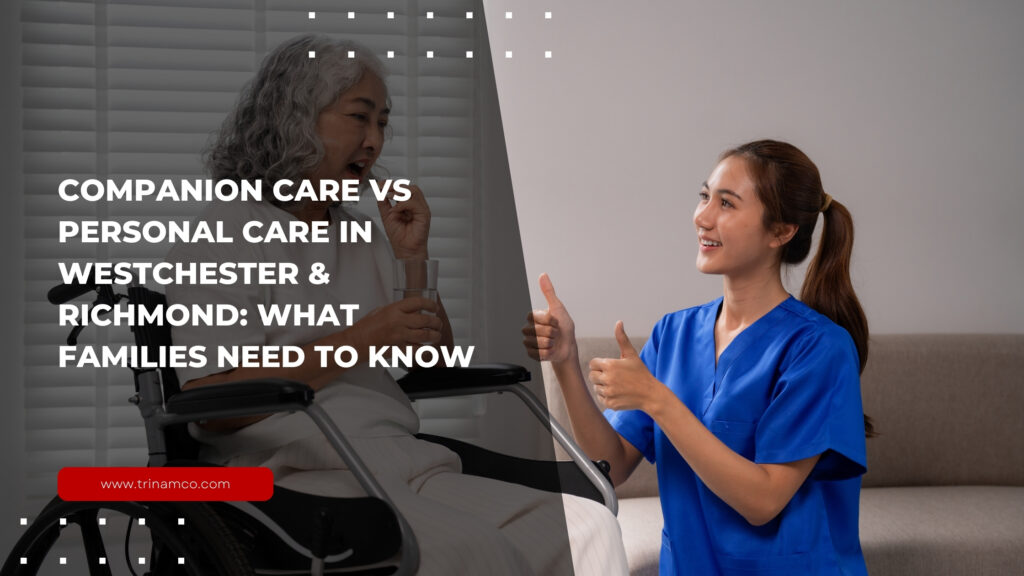
Families across Westchester, Richmond, and nearby New York counties often compare Companion Care and Personal Care when choosing how to support aging loved ones. This guide explains the differences, costs, benefits, and decision-making steps to help families make confident choices with guidance from Trinamco Home Care Agency.
Understanding Companion Care in Local Communities
Companion Care plays a vital role for seniors who want to remain independent while receiving the support needed to stay socially active, mentally engaged, and comfortable at home. In counties like Westchester and Richmond—where many seniors live alone or have family working long hours—this service helps fill daily gaps that might otherwise lead to isolation or disrupted routines.
- Encourages social interaction: Seniors in Westchester and Richmond benefit from meaningful conversation, shared activities, and community engagement. This support helps reduce loneliness and creates a sense of daily connection.
- Supports mild daily routines: Companion caregivers assist with meal preparation, medication reminders, and light housekeeping, providing seniors with the structure they need to stay organized and confident in their day-to-day lives.
- Promotes independence: This service works well for seniors who can manage their own hygiene but appreciate having someone nearby to provide oversight, help with tasks, or simply offer company. It strengthens independence without overwhelming the senior with unnecessary assistance.
- Prepares families for future care needs: Companion Care often serves as the starting point before transitioning to more hands-on services, such as Home Care Assistance. It helps families identify patterns, understand evolving needs, and plan for long-term support.
Understanding Personal Care for Safety and Daily Support
Personal Care offers direct physical assistance to seniors experiencing mobility or hygiene challenges.
- Assists with essential daily tasks: Helps with bathing, grooming, dressing, toileting, and mobility.
- Improves home safety: Beneficial for seniors at risk of falls or confusion in areas like NYC or Queens.
- Supports chronic health needs: Helps manage tasks affected by long-term illness or recovery.
- Adapts as conditions change: Often added when Companion Care no longer meets safety needs.
This prepares families to see why selecting the correct service matters.
Why Choosing the Right Care Type Matters for Families
The exemplary service ensures comfort, safety, and quality of life across New York counties.
- Enhances daily function: Proper care helps seniors in Richmond or Westchester manage routines safely.
- Reduces caregiver strain: Supports families balancing work and home responsibilities across NYC.
- Creates thoughtful long-term planning: Helps determine when Personal Care or Private Duty Nursing may be needed.
- Encourages ongoing evaluation: Needs change, and planning helps families stay prepared.
This section leads directly to the decision-making process.
How Families Can Decide Between Companion Care and Personal Care
A structured approach helps families identify what level of support best fits their loved one.
- Review daily routines: Compare the tasks the senior performs independently with those that require assistance.
- Evaluate physical needs: Struggles with bathing, balance, or transfers suggest Personal Care.
- Identify emotional needs: loneliness or low engagement may indicate the need for Companion Care.
- Assess safety concerns: Falls, confusion, or missed routines indicate the need for blended support.
- Align family routines with Trinamco’s staffing availability across counties.
This naturally leads to the side-by-side comparison.
Comparing Companion Care vs Personal Care
Understanding the differences between Companion Care and Personal Care helps families make clearer choices as needs change. This comparison outlines what each service includes, why costs vary, and how these distinctions guide long-term planning across Westchester, Richmond, and the surrounding New York areas.
- Clarifies expectations: Families understand precisely what each service covers.
- Supports financial planning: Shows why care costs differ.
- Improves long-term decision-making: Creates a realistic view of growing needs.
- Transitions into cost analysis: Introduces factors affecting local pricing.
Understanding Home Care Costs in Westchester & Richmond
Several local factors affect the cost of Companion Care and Personal Care.
- Level of assistance: Hands-on support increases cost compared to social supervision.
- Weekly hours needed: More hours increase total care expenses in areas such as the Bronx or NYC.
- Travel requirements: Distance across counties, like Kings or Richmond, may affect rates.
- Special routines or conditions: Seniors who require strict schedules may incur higher costs.
- Evening or weekend needs: Off-peak support may increase hourly rates.
These insights prepare families to use helpful evaluation tools next.
Tools Families Can Use to Evaluate Care Options
Simple tools help families make informed home care choices.
- Daily task checklist: Shows which tasks require support.
- Mobility assessment: Identifies when Personal Care is needed.
- Emotional and social review: Helps decide if Companion Care can boost engagement.
- Document preparation: Organized routines and medical notes support assessments.
- Professional evaluations: Trinamco provides assessments tailored to each family.
These tools help identify common mistakes to avoid.
Common Mistakes Families Should Avoid When Choosing Care
Avoiding these missteps ensures safer and more effective care planning.
- Choosing solely based on price: Low cost may not match essential needs.
- Delaying needed Personal Care: Waiting increases the risk of injury.
- Skipping reassessments: Needs evolve quickly for seniors across NYC counties.
- Confusing service limits: Companion Care does not offer hygiene assistance.
- Ignoring subtle changes in need: Seniors may hide difficulties with bathing or mobility.
These insights prepare readers to see real examples of how proper care helps.
Examples of Seniors Benefiting From Tailored Home Care
These real-life scenarios show how needs differ across New York neighborhoods.
- Westchester example: A socially isolated senior stays active with Companion Care.
- Richmond example: A mobility-limited senior remains safe with Personal Care.
- NYC example: A working family relies on both services for consistent support.
These examples lead to guidance for long-term care success.
Best Practices for Making the Most of Home Care Services
Effective habits help families maximize the benefits of home care.
- Review care plans monthly: Helps track changes in mobility and routines.
- Blend services when needed: Companion and Personal Care offer flexible support when combined.
- Stay in communication: Regular updates with caregivers improve outcomes.
- Add temporary support as needed: Extra help during recovery periods.
- Use Trinamco assessments to identify risks and tailor services to the seniors’ needs.
This leads to local resources and support options.
Local Resources and Support Options for Families
Community support strengthens home care planning across counties.
- County-specific needs: Seniors in the Bronx, Queens, Kings County, or Richmond face unique challenges.
- Community programs: Local groups offer social and wellness opportunities.
- Reliable agency coverage: Trinamco provides services across all listed counties.
- Online community: Families can follow updates on Trinamco’s Facebook page.
- More support options: Explore Home Care Assistance and Private Duty Nursing.
These resources set the stage for common family questions.
Frequently Asked Questions
Families across Westchester, Richmond, and nearby New York counties often ask how Companion Care and Personal Care differ when planning support for their loved ones. The answers below address the most common concerns and help guide families toward choosing the right type of home care with confidence.
1. What is the key difference between Companion Care and Personal Care?
Companion Care focuses on social engagement, errands, and reminders that help seniors maintain daily routines and stay connected. Personal Care provides physical support with hygiene, mobility, and hands-on daily tasks. Families choose between the two based on independence levels, safety concerns, and the senior’s ability to manage essential activities.
2. How do families know which service a senior living alone needs?
Seniors experiencing loneliness, inactivity, or a lack of social structure often benefit from Companion Care. Those who struggle with hygiene, balance, dressing, or movement typically need Personal Care to remain safe at home. Some families combine both services when seniors show mixed emotional and physical support needs.
3. Why does Personal Care cost more across New York counties?
Personal Care requires trained caregivers skilled in assisting with physical and hygiene tasks, which increases service costs. Seniors with mobility challenges often require more time, attention, and hands-on support, which contributes to higher costs. Local travel requirements and scheduling demands across counties such as Westchester and Richmond also affect the overall rate.
4. How can families confidently choose the exemplary home care service?
Families can start by reviewing mobility needs, emotional well-being, and any safety issues the senior may be facing. Exploring Trinamco’s service options by county helps identify which type of support fits best within the family’s goals. Scheduling a care assessment allows Trinamco to provide personalized recommendations based on daily routines and evolving needs.
Get Support From Trinamco Today
If you need help choosing the exemplary care service, Trinamco is ready to guide your family.
Call (914) 294-4091, explore our services, or schedule a home care assessment to get started.